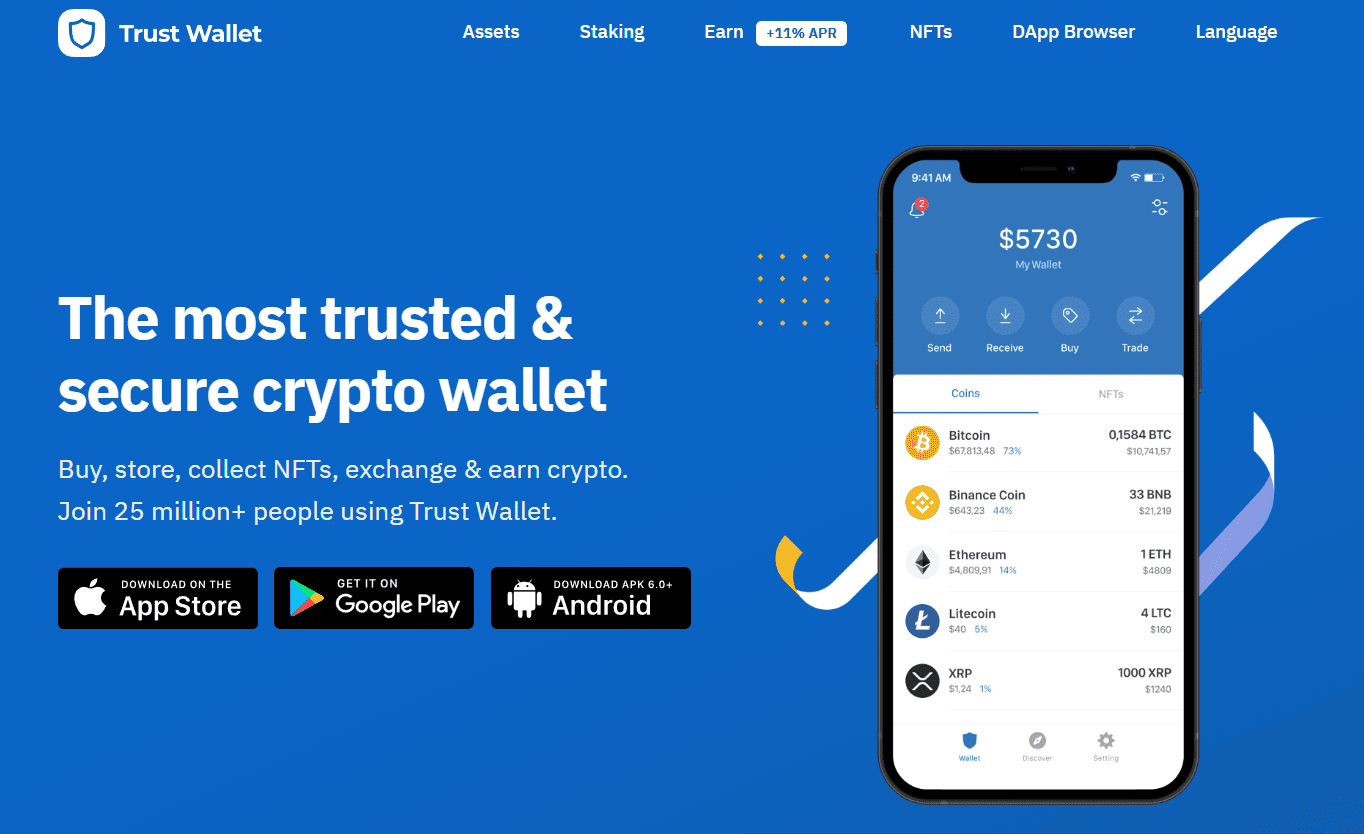
Trust Wallet –
Cryptocurrency ownership requires both security and convenience, and Trust Wallet is one of the leading mobile wallets that offers both. With over 5 million active users, Trust Wallet is a non-custodial wallet, meaning only you have control over your private keys. Whether you are a beginner or an experienced crypto investor, understanding how to use Trust Wallet is essential for managing your digital assets safely.
This guide covers everything about Trust Wallet—setup, features, security, transaction management, and tips for safe crypto handling.
What is Trust Wallet?
Trust Wallet is a mobile cryptocurrency wallet available on iOS and Android devices. It supports thousands of cryptocurrencies, including Ethereum (ETH), Bitcoin (BTC), Binance Coin (BNB), and various ERC-20, BEP-2, and BEP-20 tokens.
Key features include:
Non-custodial security: You control your private keys
Multi-coin support: Manage multiple crypto assets in one app
DeFi integration: Connect to decentralized applications (DApps)
Built-in exchange features: Swap tokens without leaving the app
Trust Wallet is designed to provide maximum security while remaining user-friendly, making it ideal for both beginners and advanced users.
Step 1: Download and Install Trust Wallet
Visit the official Trust Wallet website: https://trustwallet.com
Download the app from App Store (iOS) or Google Play (Android)
Install and open the app
Choose Create a New Wallet or Import Wallet if you already have one
Always download Trust Wallet from official sources to avoid phishing or fake apps.
Step 2: Set Up Your Wallet
After installing:
Create a secure password or PIN to protect the app
Write down your 12-word recovery phrase (seed phrase)
Confirm the recovery phrase in the app to complete setup
The recovery phrase is the only way to restore your wallet. Store it offline and never share it.
Step 3: Add Cryptocurrencies
Open Trust Wallet and tap + Add Tokens
Search for the cryptocurrency you want to add
Tap Enable to add it to your wallet interface
You can now view balances, send, receive, and swap cryptocurrencies directly from the wallet.
Step 4: Sending and Receiving Crypto
Sending Crypto
Tap the cryptocurrency you want to send
Click Send and enter the recipient’s address
Confirm the amount and transaction fee
Review and approve the transaction
Receiving Crypto
Tap the cryptocurrency you want to receive
Click Receive to display your wallet address or QR code
Share the address safely with the sender
Always double-check the recipient’s address. Sending crypto to the wrong address is irreversible.
Step 5: Using the Built-In Swap Feature
Trust Wallet allows token swaps without leaving the app:
Open the Swap/Exchange tab
Select the token you want to swap and the token you want to receive
Confirm the exchange rate and fees
Execute the swap
This feature simplifies trading small amounts of crypto without using an exchange.
Step 6: Connect to Decentralized Applications (DApps)
Trust Wallet includes a Web3 browser for interacting with decentralized apps:
Open the Browser tab
Navigate to a DApp (like a DeFi protocol or NFT marketplace)
Connect your Trust Wallet
Approve transactions directly from your wallet
DApps allow you to earn, trade, or stake crypto without leaving your wallet.
Step 7: Security Best Practices
Trust Wallet is secure if used correctly:
Never share your recovery phrase
Enable biometric login (fingerprint/Face ID)
Use a strong PIN
Verify DApp URLs before connecting
Keep your mobile OS updated
Avoid storing large amounts of crypto without additional hardware wallet security
Step 8: Troubleshooting Common Issues
Lost recovery phrase: Wallet cannot be restored without it
Transaction stuck: Check blockchain explorer and network fees
App not opening: Reinstall or update the app
Tokens not visible: Add the token manually using the contract address
Step 9: Staking with Trust Wallet
Trust Wallet supports staking certain cryptocurrencies for passive income:
Open the cryptocurrency you want to stake
Tap Stake and select the validator (if applicable)
Confirm the amount and start earning rewards
Staking rewards vary depending on the cryptocurrency and network.
Step 10: Frequently Asked Questions
Q1: Is Trust Wallet safe?
A1: Yes, as long as you control your recovery phrase and follow security best practices.
Q2: Can I recover my wallet on a new device?
A2: Yes, using your 12-word recovery phrase.
Q3: Does Trust Wallet charge fees?
A3: Trust Wallet does not charge fees, but blockchain transaction fees apply.
Q4: Can I use Trust Wallet for NFTs?
A4: Yes, it supports NFT management for compatible blockchains.
Q5: Can I stake crypto in Trust Wallet?
A5: Yes, it supports staking for selected coins like BNB, TRX, and ADA.
Step 11: Long-Term Security Recommendations
Store your recovery phrase offline in a safe location
Avoid sharing sensitive wallet information online
Use a hardware wallet for storing large amounts of crypto
Enable app-level security like PIN and biometric login
Regularly monitor transactions and wallet activity
Following these practices ensures your crypto remains safe while using Trust Wallet.
Conclusion
Trust Wallet is a versatile and secure mobile wallet that combines ease of use with powerful features like token swaps, staking, and DApp integration. By controlling your private keys and following security best practices, you can safely manage your cryptocurrency anywhere.
Whether you are sending, receiving, staking, or exploring DeFi, Trust Wallet is a reliable tool for secure crypto management in 2025.