Trust Wallet –
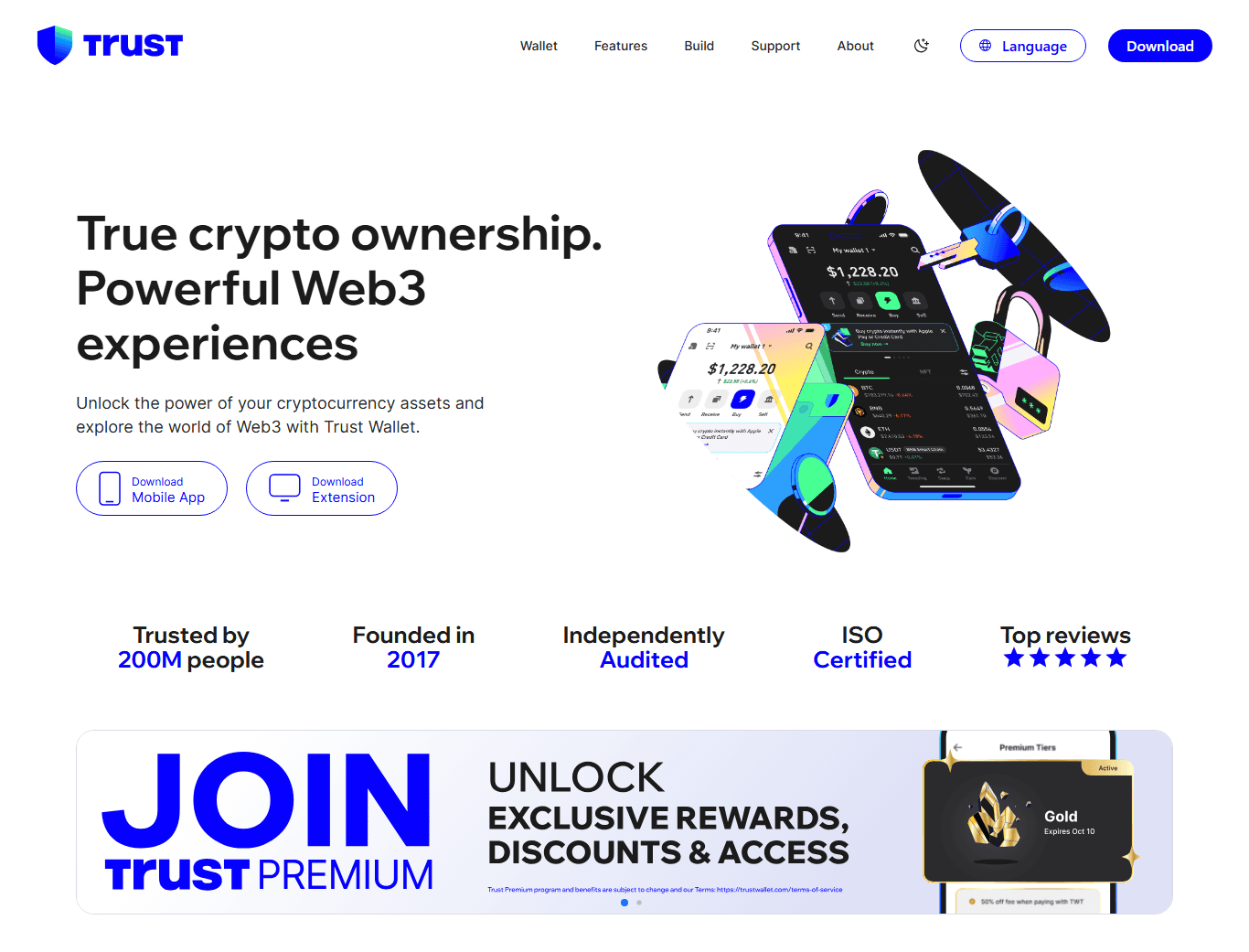
Cryptocurrency ownership has evolved beyond simple wallets on exchanges. Today, the emphasis is on security, privacy, and control over your assets, which is why mobile wallets like Trust Wallet have become indispensable. Trust Wallet is a non-custodial mobile wallet, meaning you alone control your private keys, giving you full authority over your crypto holdings.
This guide will walk you through everything you need to know about Trust Wallet—from setup and security to transactions, staking, decentralized applications (DApps), and advanced strategies to manage your crypto safely and efficiently.
What is Trust Wallet?
Trust Wallet is a mobile cryptocurrency wallet available on iOS and Android devices. It allows users to store, send, receive, and trade a wide variety of cryptocurrencies, including Bitcoin (BTC), Ethereum (ETH), Binance Coin (BNB), and thousands of other ERC-20, BEP-2, and BEP-20 tokens.
Key features of Trust Wallet include:
Non-custodial storage: You hold your private keys and recovery phrase.
Multi-coin support: Manage multiple cryptocurrencies in one app.
Built-in DApp browser: Connect and interact with decentralized applications directly.
Token swap and exchange: Trade cryptocurrencies seamlessly without leaving the app.
Staking capabilities: Earn passive income by staking supported coins.
Trust Wallet combines security and usability, making it suitable for beginners and advanced users alike.
Step 1: Downloading and Installing Trust Wallet
Visit the official website: https://trustwallet.com
Choose your platform (iOS or Android) and download the app from the official App Store or Google Play Store.
Install the app and open it.
Choose Create a New Wallet if you are new, or Import Wallet if you have an existing recovery phrase.
Only download the app from official sources. Fake apps are common and can steal funds.
Step 2: Setting Up Your Wallet
When creating a new wallet:
Secure your wallet with a PIN or passcode to prevent unauthorized access.
Write down the 12-word recovery phrase. This phrase is the only way to restore your wallet if your phone is lost or stolen.
Confirm the recovery phrase in the app to complete the setup.
Keep your recovery phrase offline and never share it. Anyone with access to it can control your funds.
Step 3: Adding and Managing Cryptocurrencies
After setup, you can add supported cryptocurrencies:
Open Trust Wallet and tap + Add Tokens.
Search for the cryptocurrency you want to add.
Enable it to display it on your main wallet screen.
You can now view balances, transaction history, and manage multiple crypto assets from a single interface.
Step 4: Sending and Receiving Crypto
Sending Cryptocurrency
Tap the crypto you want to send.
Click Send and enter the recipient’s address.
Input the amount and select the network (if applicable).
Review all details on-screen and approve the transaction.
Receiving Cryptocurrency
Tap the crypto you want to receive.
Click Receive to view your wallet address or QR code.
Share the address safely with the sender.
Double-check addresses before sending. Blockchain transactions are irreversible, so a single mistake can result in permanent loss.
Step 5: Using Trust Wallet’s Token Swap Feature
Trust Wallet allows users to swap tokens directly within the app:
Open the Swap/Exchange tab.
Select the token you want to exchange and the token you want to receive.
Confirm the exchange rate and applicable fees.
Execute the swap.
This feature eliminates the need for third-party exchanges for small trades, saving time and additional fees.
Step 6: Staking Cryptocurrencies
Trust Wallet supports staking for several cryptocurrencies such as BNB, TRX, ADA, and more:
Open the coin you want to stake.
Tap Stake or Earn Rewards.
Choose a validator (for proof-of-stake coins).
Confirm the amount to stake.
Staking allows you to earn passive income while holding your assets securely in your wallet.
Step 7: Connecting to Decentralized Applications (DApps)
Trust Wallet has a built-in Web3 browser to interact with decentralized applications:
Open the Browser tab.
Visit a supported DApp (e.g., DeFi platforms, NFT marketplaces).
Connect your Trust Wallet to the DApp.
Approve transactions and manage your digital assets directly.
This feature makes Trust Wallet a gateway to DeFi, NFTs, and other blockchain-based applications.
Step 8: Security Best Practices
To maximize security:
Never share your recovery phrase with anyone.
Enable biometric authentication (fingerprint or Face ID).
Use a strong PIN or password.
Verify all DApp URLs before connecting your wallet.
Keep your mobile OS and app updated.
Consider a hardware wallet for storing large amounts of crypto.
Following these steps keeps your assets safe from hacks, phishing, and malware.
Step 9: Troubleshooting Common Issues
Lost recovery phrase: Wallet cannot be recovered without it.
Stuck transactions: Verify network status and transaction fees; higher fees may be required.
App crashes or won’t open: Reinstall the app or clear cache.
Tokens not showing: Add tokens manually using the contract address.
Step 10: Advanced Tips for Trust Wallet Users
Multiple Wallet Management: Create and manage multiple wallets within the app for different purposes.
Hidden Wallets: Use passphrases to create separate wallets hidden behind your main account.
Connect to DeFi protocols securely: Only use trusted DApps to avoid scams.
Use portfolio tracking: Monitor assets and staking rewards directly within the app.
Regular backups: Keep your recovery phrase in multiple safe locations (offline or in a secure metal backup).
Step 11: Frequently Asked Questions
Q1: Is Trust Wallet safe?
A1: Yes, it’s non-custodial. As long as you protect your recovery phrase and follow security practices, your funds are secure.
Q2: Can I restore my wallet on a new device?
A2: Yes, with your 12-word recovery phrase.
Q3: Are there fees for using Trust Wallet?
A3: Trust Wallet itself doesn’t charge fees, but blockchain network fees apply.
Q4: Can I manage NFTs in Trust Wallet?
A4: Yes, NFTs compatible with Ethereum, BSC, and supported chains can be viewed and stored.
Q5: Can I stake crypto with Trust Wallet?
A5: Yes, supported coins can be staked directly for rewards.
Step 12: Long-Term Security Recommendations
Store recovery phrase offline in a fireproof and waterproof location.
Never share your PIN or phrase with anyone.
For large holdings, use Trust Wallet in combination with a hardware wallet.
Regularly check for app updates and network security alerts.
Monitor transactions for suspicious activity.
Following these guidelines ensures your wallet remains safe over the long term.
Conclusion
Trust Wallet is a versatile, secure, and user-friendly mobile wallet for managing cryptocurrencies in 2025. It combines full control of private keys, multi-coin support, staking, DApp integration, and token swaps, making it ideal for beginners and advanced crypto users alike.
By following the steps in this guide—setting up your wallet, protecting your recovery phrase, managing crypto, interacting with DApps, and implementing security best practices—you can confidently manage your digital assets anywhere.
Trust Wallet is more than just a wallet; it’s a gateway to decentralized finance, NFTs, and the broader cryptocurrency ecosystem.